How to Prepare for a Doctor Appointment (in 15 Minutes)
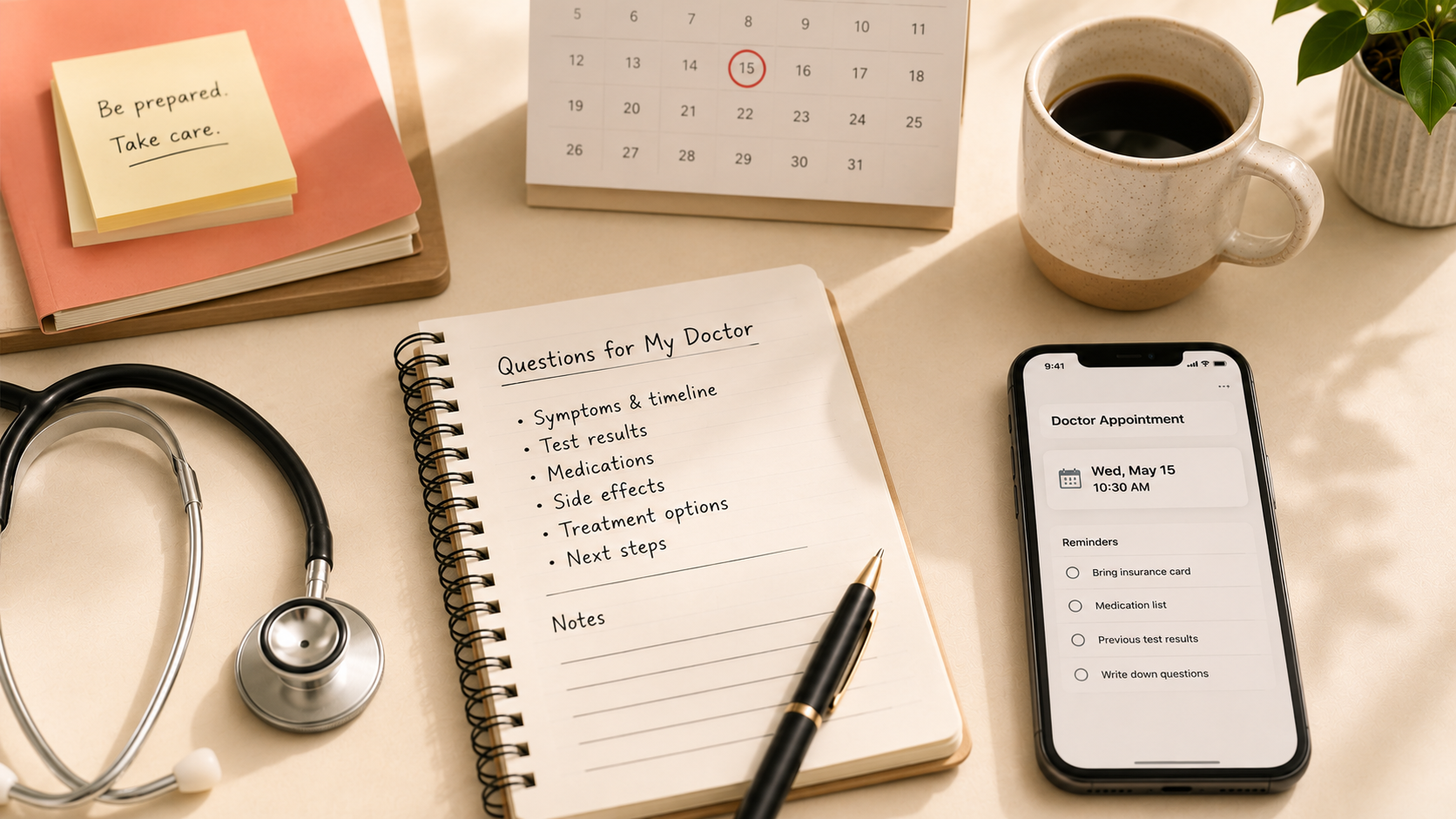
The average doctor visit is over in well under fifteen minutes. Walk in unprepared and you spend them rambling, then leave the parking lot remembering the one thing you meant to ask.
Learning how to prepare for a doctor appointment is mostly about respecting how little time you get. A few minutes of prep turns a vague chat into a focused conversation. Here is how, with AI helping you organize your thinking, not diagnose you.
Why short appointments go sideways
You forget half of what you wanted to say. You describe symptoms out of order. You answer the doctor's questions but never get to your own. And you leave without a clear plan or a next step. None of that is a knowledge problem. It is a preparation problem, and that is the good news, because preparation is fixable.
The 30-second summary that changes the visit
The single most useful thing you can bring is a tight, spoken-aloud summary of what is going on: what the symptom is, when it started, what makes it better or worse, and how it affects your day. Said in thirty seconds, it gives the doctor a clean starting point instead of a scramble, and it leaves more of those precious minutes for answers.
The symptom timeline say it in 30 seconds
What it is, since when, what changes it, and how it affects daily life. Tight and in order.
Your priority questions most important first
Ask the things you most need answered before the time runs out, not after.
What to bring do not assume
Your current medications, allergies, and any relevant history or recent results.
Where AI comes in
Tell an AI assistant what is going on and it will organize it into that crisp summary and a prioritized question list. Be clear with it: you want preparation, not a diagnosis.
In your own words, ask the AI to:
- Organize my symptoms into a clear timeline I can say out loud in 30 seconds.
- List the most important questions to ask, in priority order.
- Remind me what information the doctor will want from me.
- Not attempt a diagnosis; keep it to preparation only.
The exact prompt is in the guide's healthcare workflows.
A quick example
"Headaches for three weeks, worse in the afternoon, a little better with ibuprofen, starting to affect my work."
A 30-second summary you can read aloud, plus prioritized questions: what could be causing this, what would you want to rule out, what should I do day to day, and what would be a reason to come back sooner. It reminds you to bring your medication list, and it offers no diagnosis of its own.
Get the healthcare workflows
The guide includes ten healthcare workflows: appointment prep, reading a bill, organizing records, medication tracking, and more.